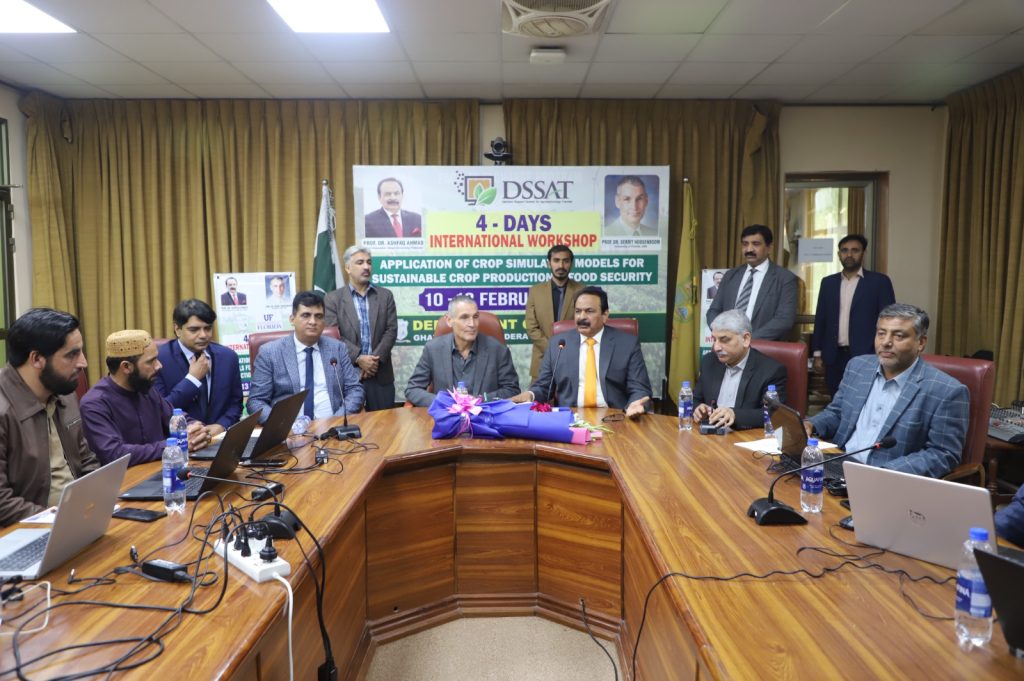
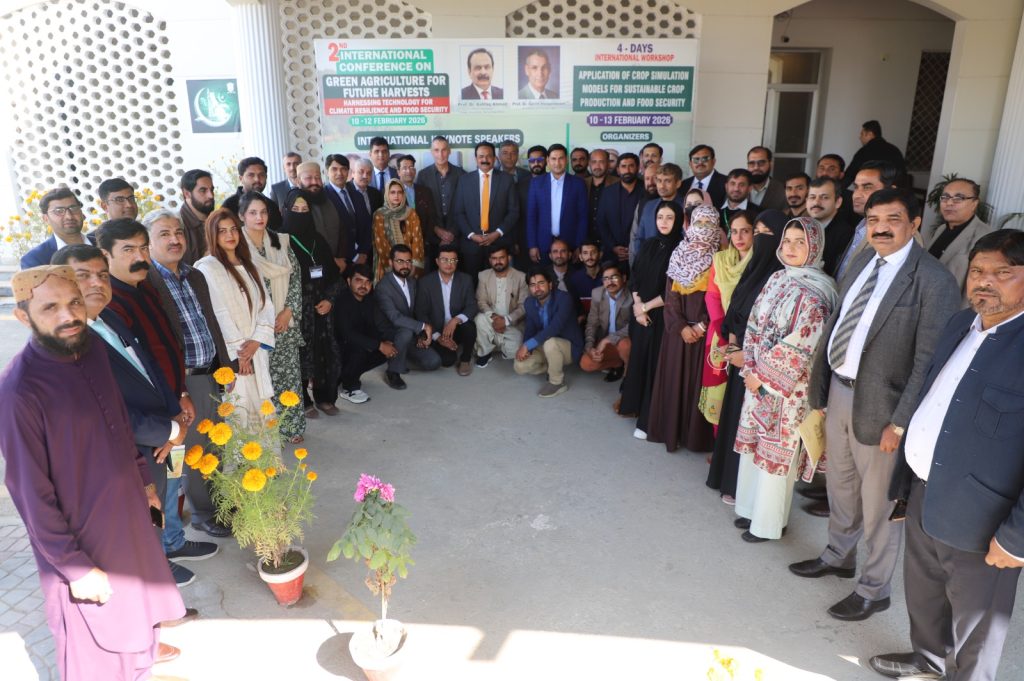
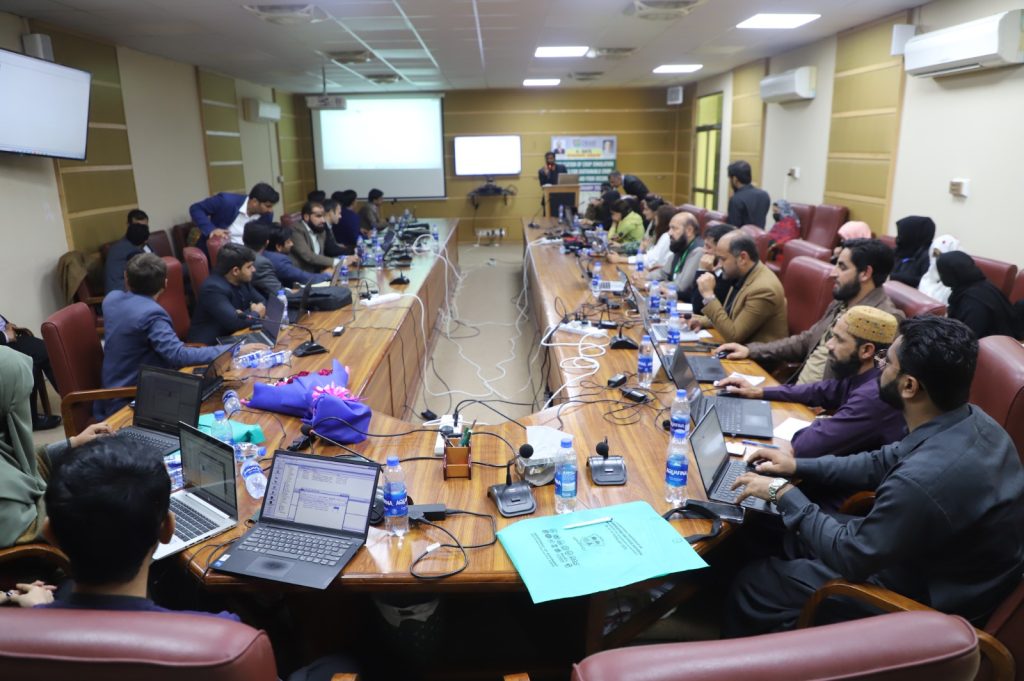
A hands-on DSSAT training workshop was conducted from February 10 to 13, 2026, at Ghazi University, Dera Ghazi Khan, Pakistan. The workshop was led by two DSSAT trainers including Dr. Hafiz M Hammad from MNS University of Agriculture, Multan, and Saeed Ahmad from the Oilseeds Research Station, Khanpur with the support of six moderators including Dr. Wajid Nasim, Dr. Jamshad Hussain, Dr. Muhammad Shaukat, Dr. Irfan Rasool Nasir, Dr. Muhammad Rehan and Ahmad Wahab. The training was attended by 41 participants representing all provinces of Pakistan.
The participants received a warm welcome from Professor Dr. Ashfaq Ahmad, the Vice Chancellor of Ghazi University and Prof. Dr. Gerrit Hoogenboom. The Vice Chancellor assured the participants that the University would provide all necessary facilities to ensure the success of the training. The DSSAT group members of Pakistan, including Prof. Syed Aftab Wajid, University of Agriculture Faisalabad, Prof. Dr. Shakeel Ahmad, Bahauddin Zakariya University, Multan and Prof. Dr. Fahd Rasul, University of Agriculture Faisalabad, delivered comprehensive lectures on the significance and practical applications of DSSAT for crop data analysis and for developing future scenarios to assess the potential impacts of climate change on agriculture in Pakistan. The trainers, along with the moderators, made a dedicated effort to familiarize participants with the practical applications and uses of the DSSAT crop modeling ecosystem.
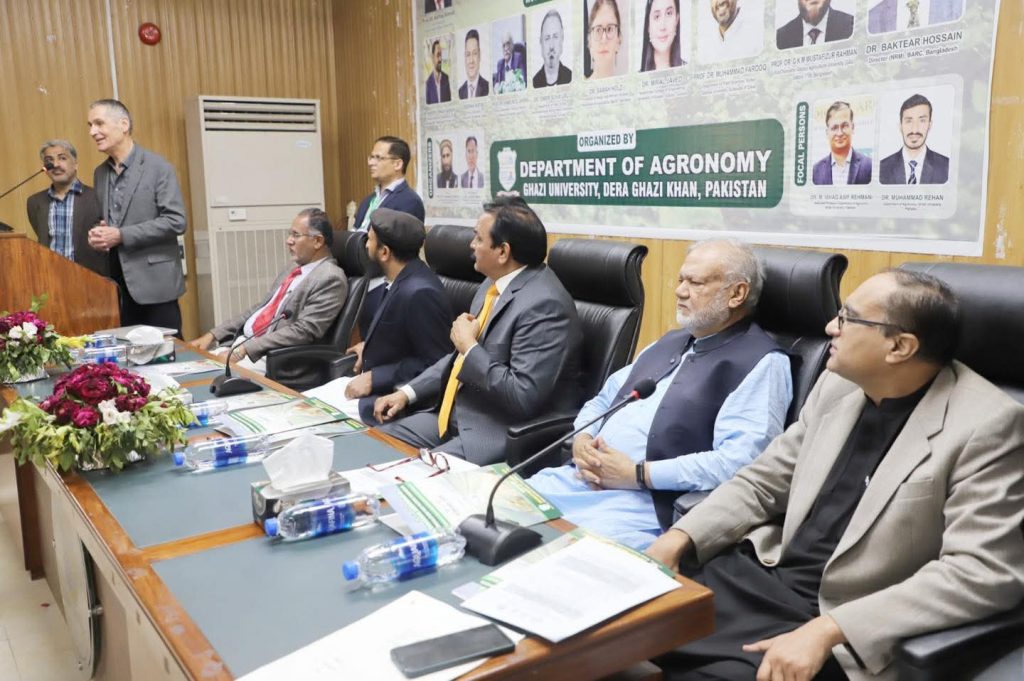
Prof. Dr. Hoogenboom addressed the trainees and other researchers at Ghazi University, emphasizing the importance of applying DSSAT under real farmer-field conditions. He highlighted that although the DSSAT model may have certain limitations, it remains one of the most effective tools for decision-making and policy formulation. He encouraged all participants to apply DSSAT in their practical field research.
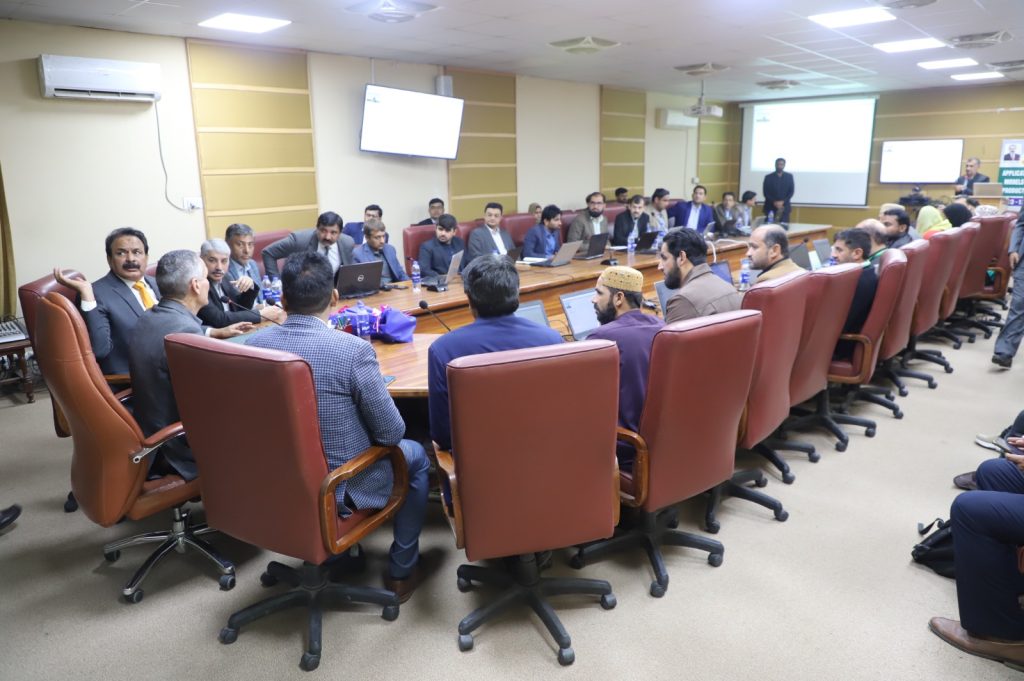
The training comprised 12 hands-on exercises that were completed over four days. In addition, six technical presentations were delivered, focusing on crop production assessment, climate risk analysis, and environmental sustainability using crop simulation models.
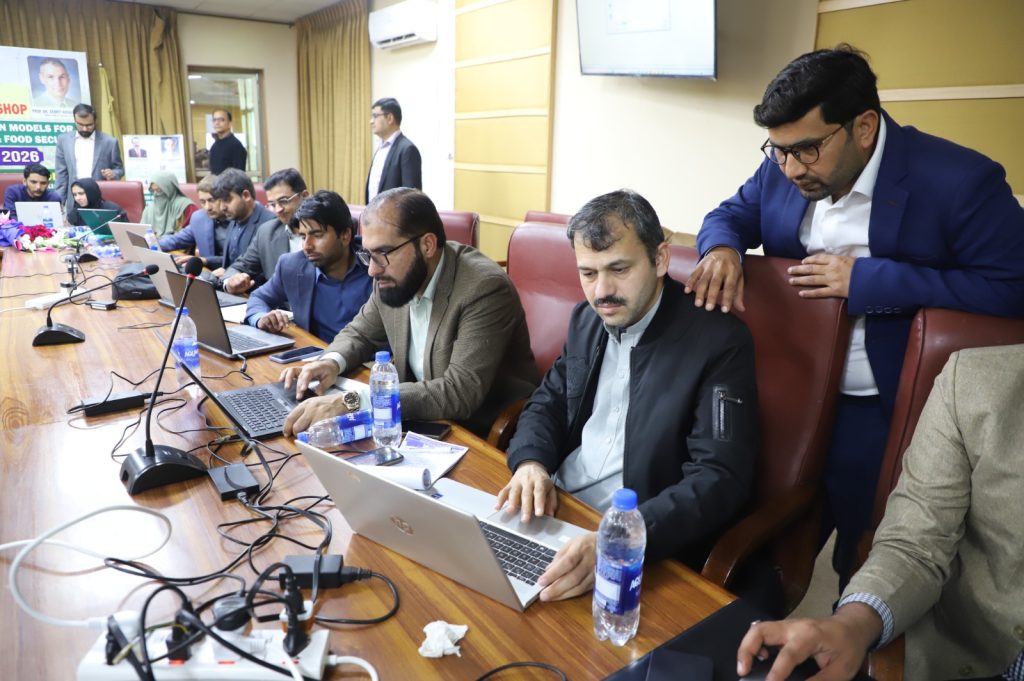
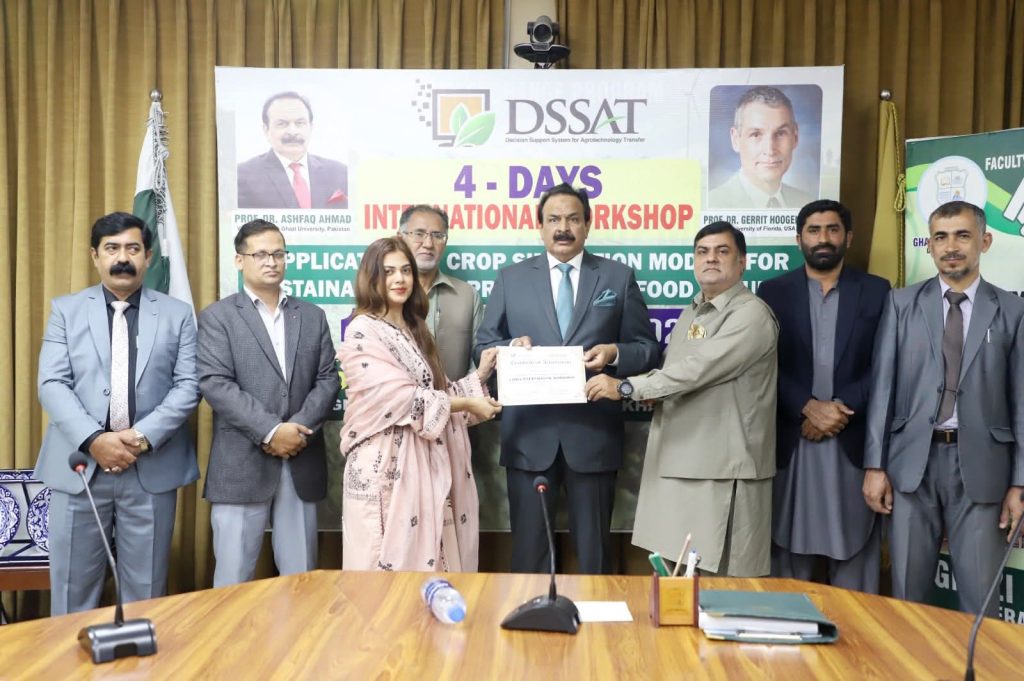
All registered participants received a complete set of training materials, including exercises, presentations, a group photograph, certificates, and contact details of the DSSAT faculty and fellow participants.
The DSSAT trainer and faculty remain committed to providing continued online and in-person support to interested participants, assisting them in simulating their own field data using the DSSAT model.