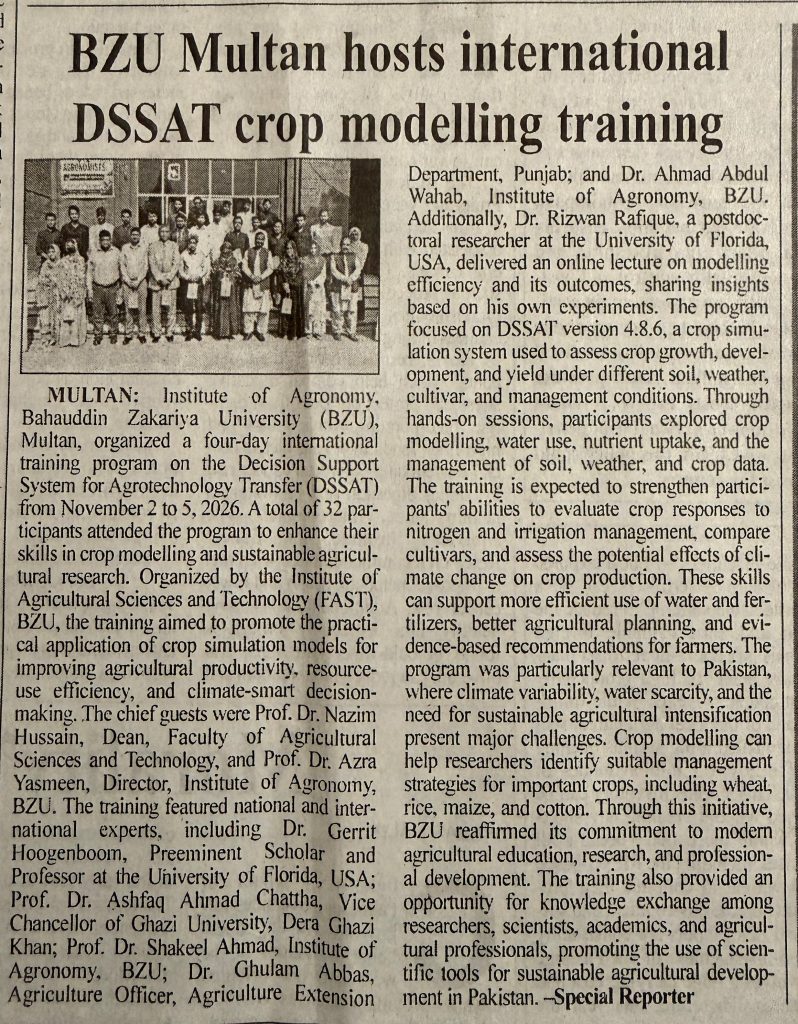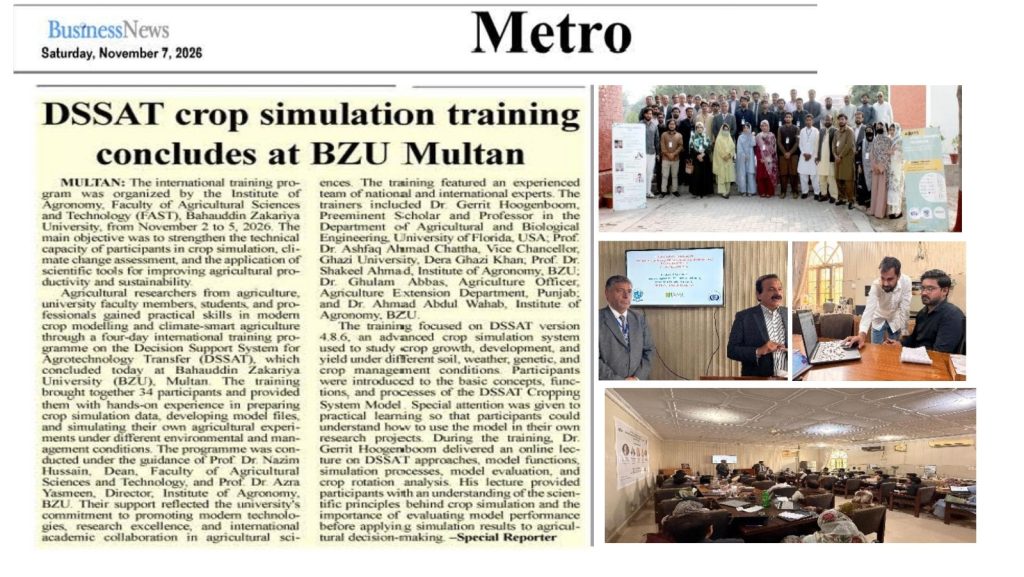
The Institute of Agronomy, Bahauddin Zakariya University, Multan, Pakistan, organized a four-day training program on the Decision Support System for Agro-Technology Transfer (DSSAT) from November 2–5, 2026. Speakers and faculty included Prof. Dr. Ir. Gerrit Hoogenboom, University of Florida; Prof. Dr. Ashfaq Ahmad Chattha, Vice Chancellor, Ghazi University, Dera Ghazi Khan; Prof. Dr. Shakeel Ahmad, Bahauddin Zakariya University, Multan; Dr. Ghulam Abbas, Agriculture Office, Agriculture Extension Department; and Dr. Ahmad Abdul Wahab, Bahauddin Zakariya University, Multan.
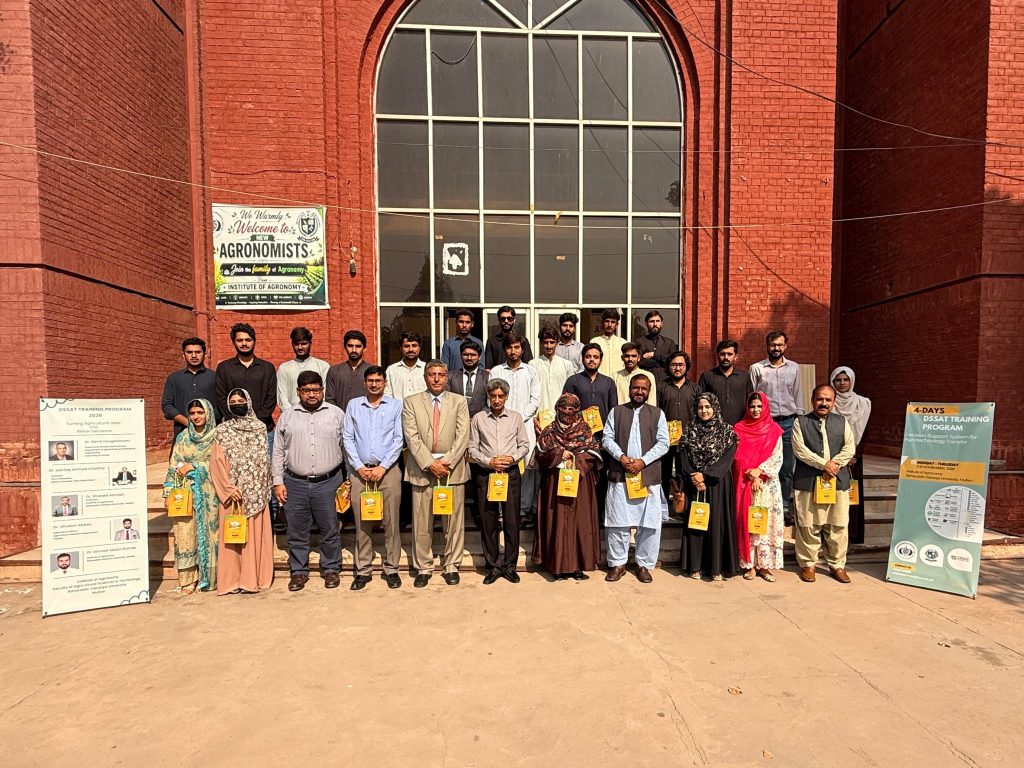
The training was attended by 34 participants representing graduate students from Bahauddin Zakariya University, Multan and MNS University of Agriculture, Multan; scientists from Ayub Agricultural Research Institute (AARI); Agronomic Research Stations Khanewal and Bahawalnagar; and various industries, including Power Crop Sciences; Suncrop Pvt. Limited, Multan.
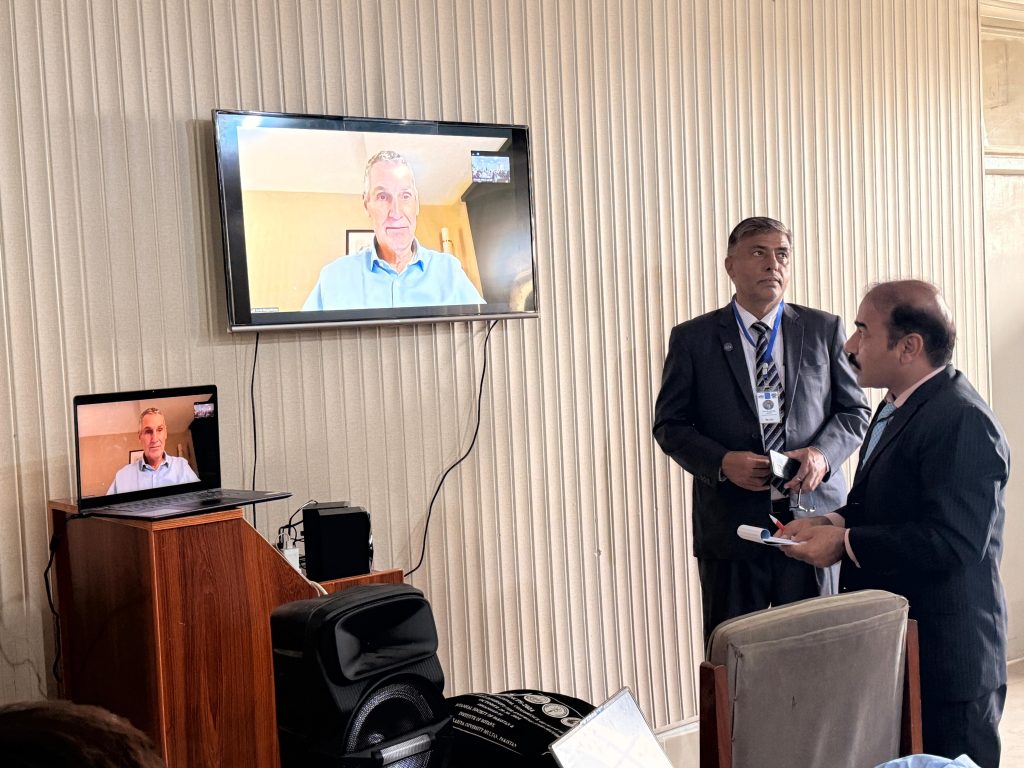
Dr. Rizwan Rafique, a postdoctoral researcher at the University of Florida, USA, delivered an online lecture on cotton modeling and shared insights from his own experiments. Dr. Aftab Nazeer, Assistant Professor of Agricultural Engineering, BZU, delivered a lecture introducing climate models and projections, fundamentals, tools, and applications for Pakistan. Dr. Samiullah, Associate Professor of Plant Breeding and Genetics, elaborated on the significance of crop breeding under current and future climate scenarios and linked genetics with DSSAT. Prof. (Retd.) Syed Aftab Wajid delivered a talk on Genetic Coefficients and growing degree-day requirements for the CERES and CROPGRO modules.
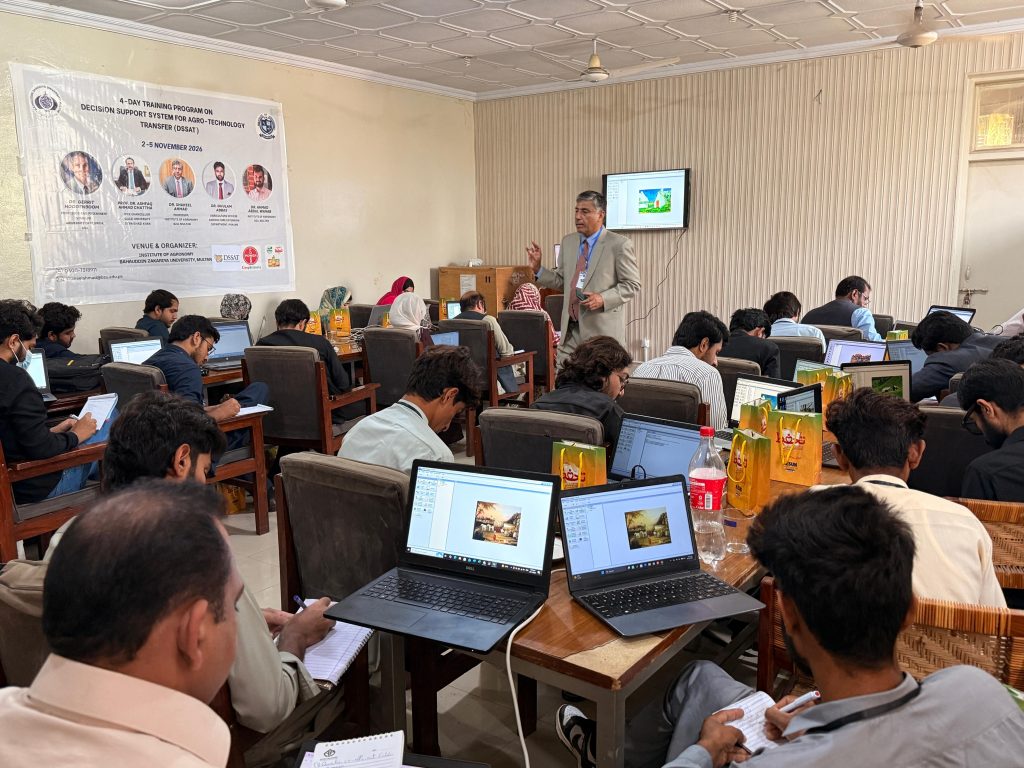
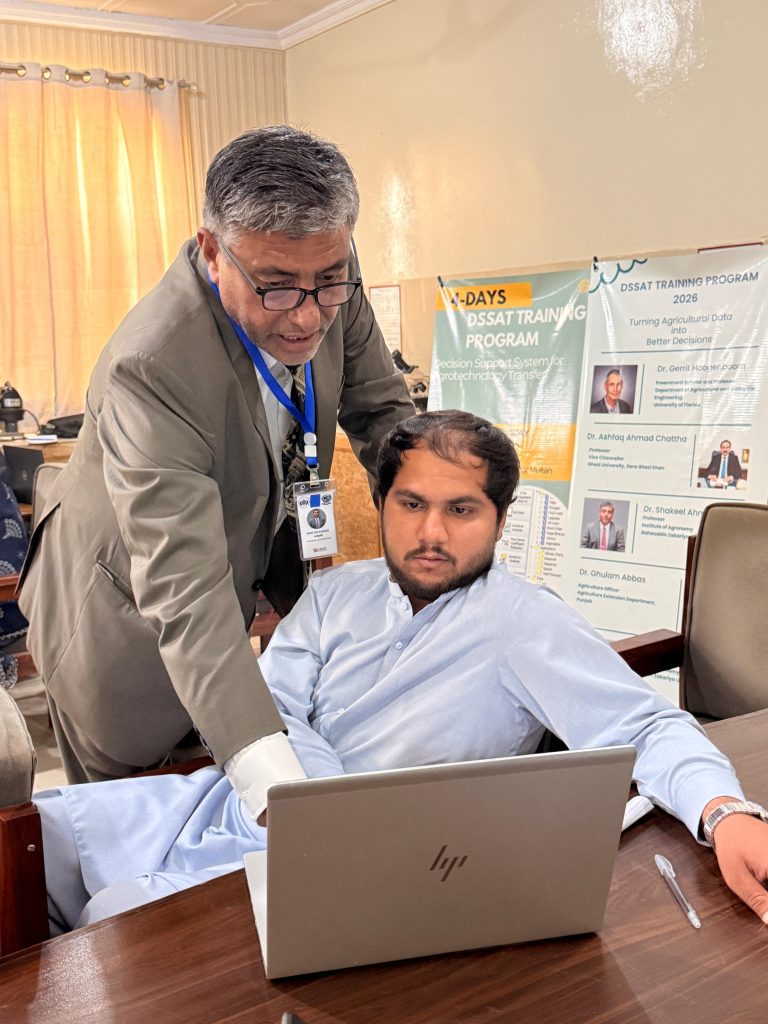
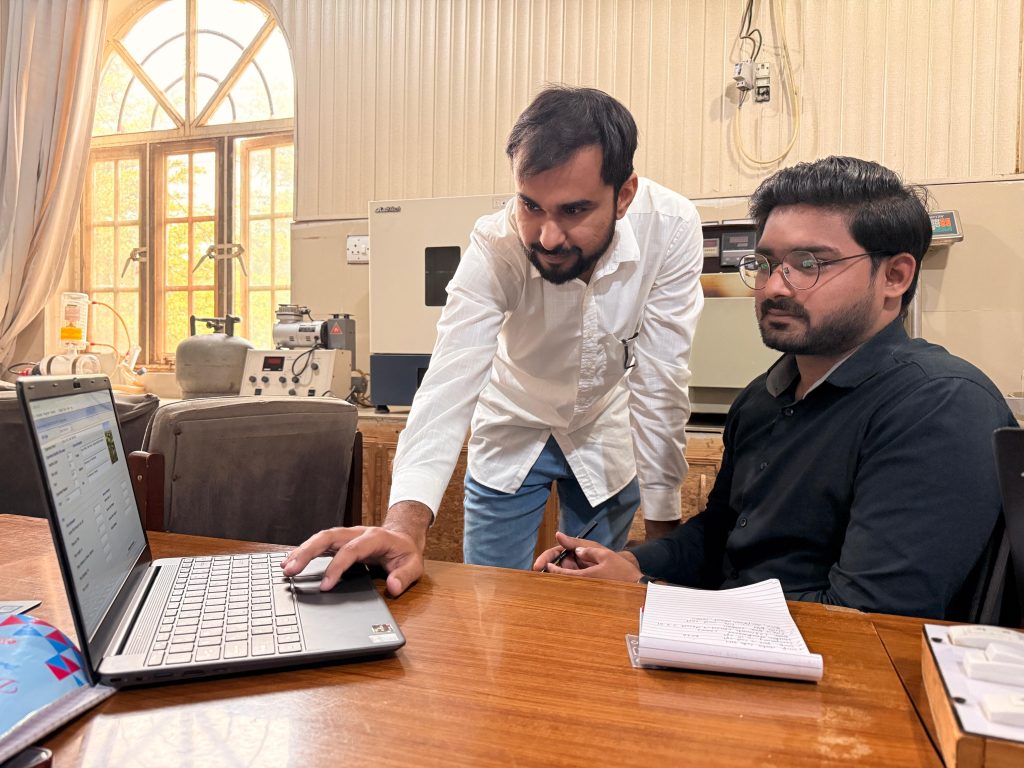
The DSSAT training program included presentations, demos, and exercises that participants completed over 4 days. Presentations were delivered from Monday to Thursday, focusing on familiarizing participants with a comprehensive computer-based crop growth model for simulating growth and yield, soil-plant-environment interaction, potential production, water-, nitrogen-, and phosphorus-limited production, nutrient and carbon dynamics, and their application to real-world agricultural problems. Further, it focused on operating DSSAT Version 4.8.6, the DSSAT Cropping System Model and its modules, minimum data requirements, experimental data collection, climatic risk and sustainability, pest and disease damage, climate change and climate variability, and model applications (seasonal analysis, sequential/rotational analysis, spatial analysis, climate change analysis, and crop yield improvements and yield gap analysis) by applying DSSAT-CSM to improve cropping-system management under current and future climatic conditions.
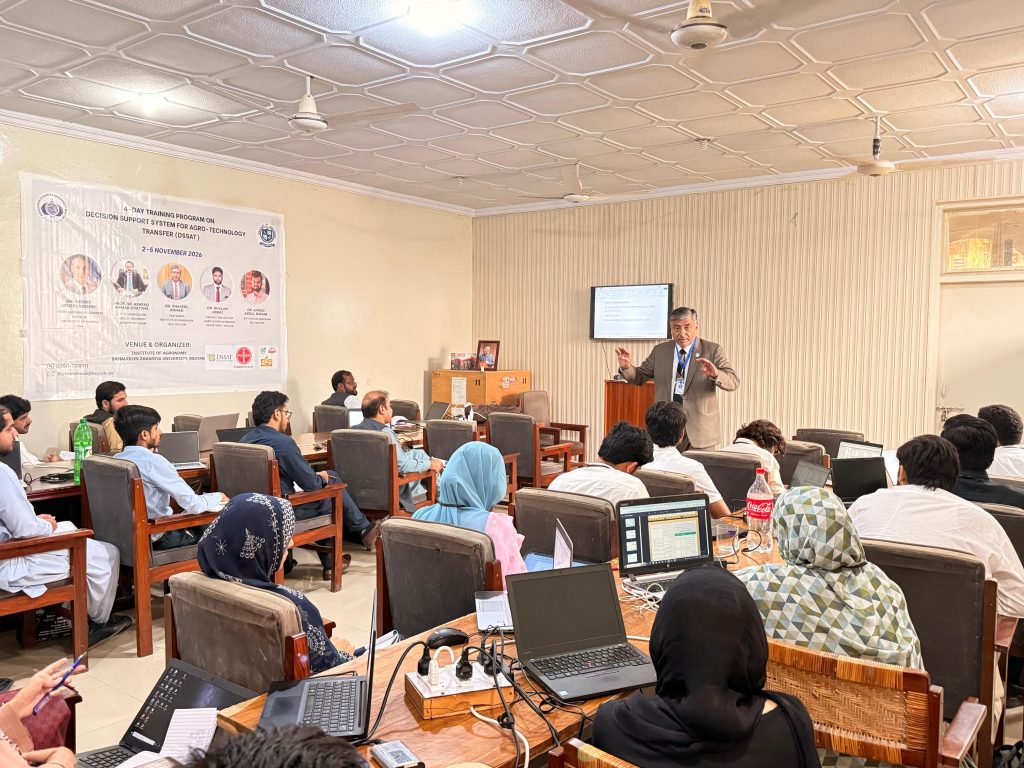
The dedication of the organizers and trainers significantly enhanced the learning experience, highlighting BZU’s commitment to advancing agricultural education and research for sustainable development and ensuring food security under current and climate change scenarios.
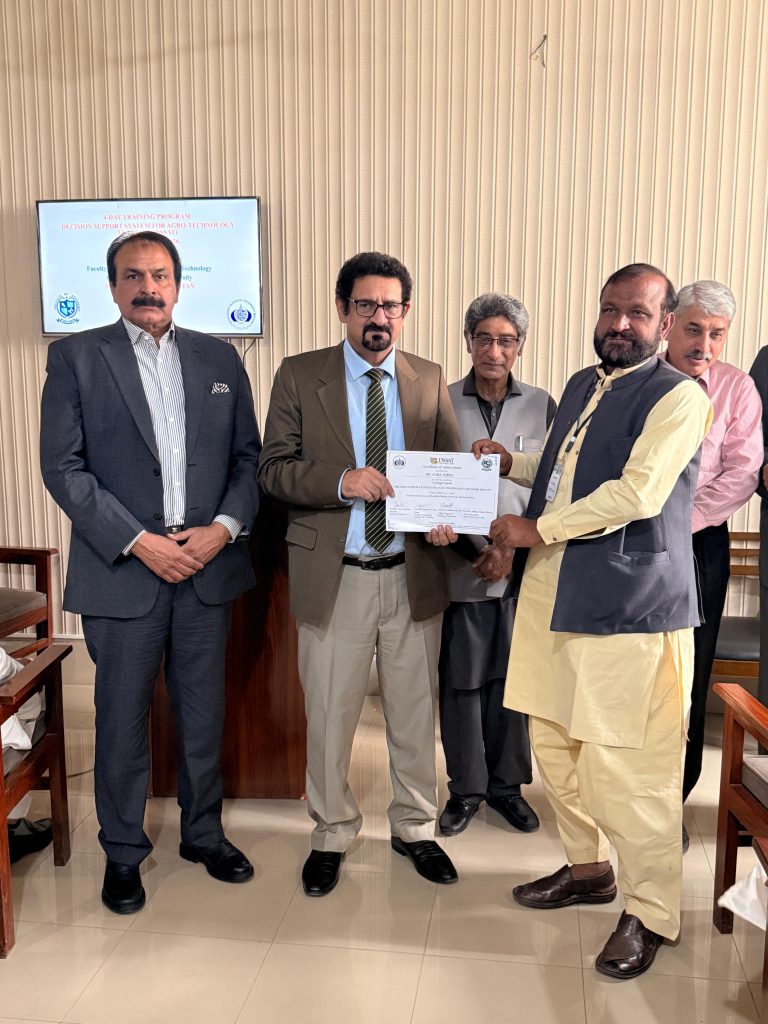
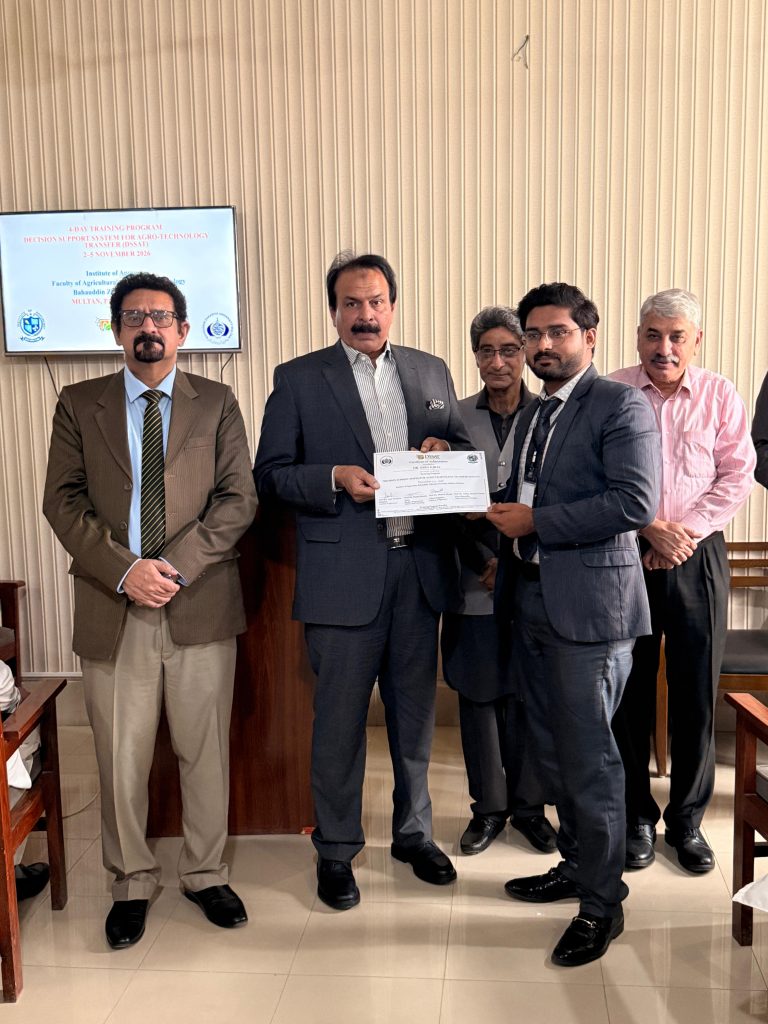
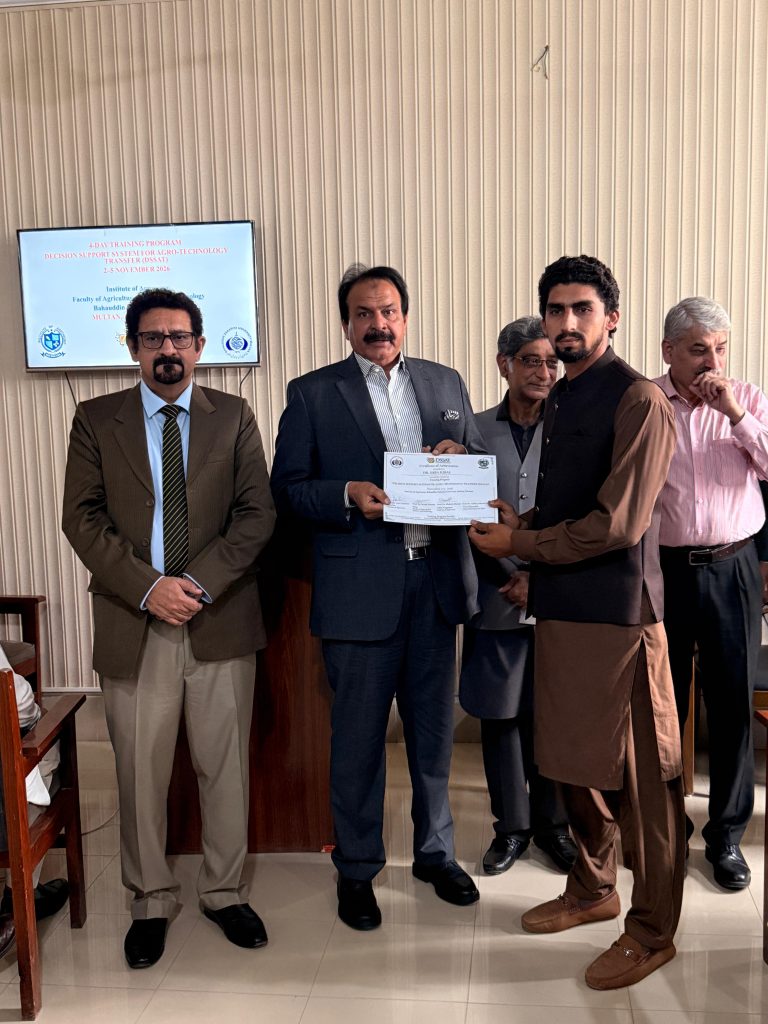
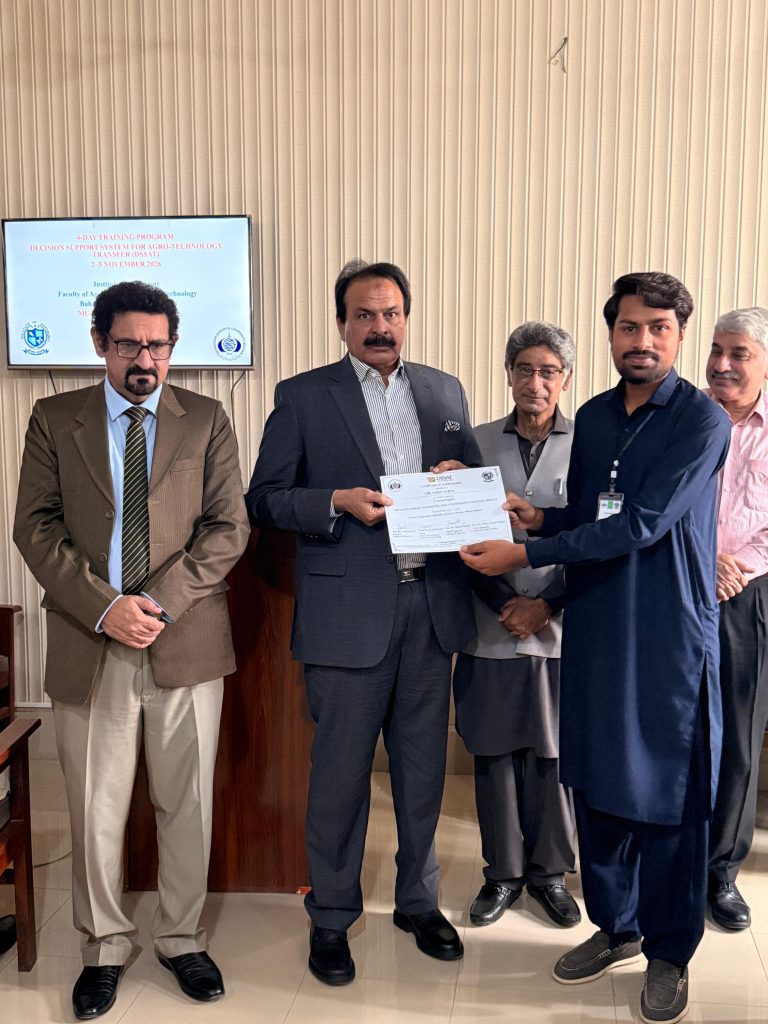
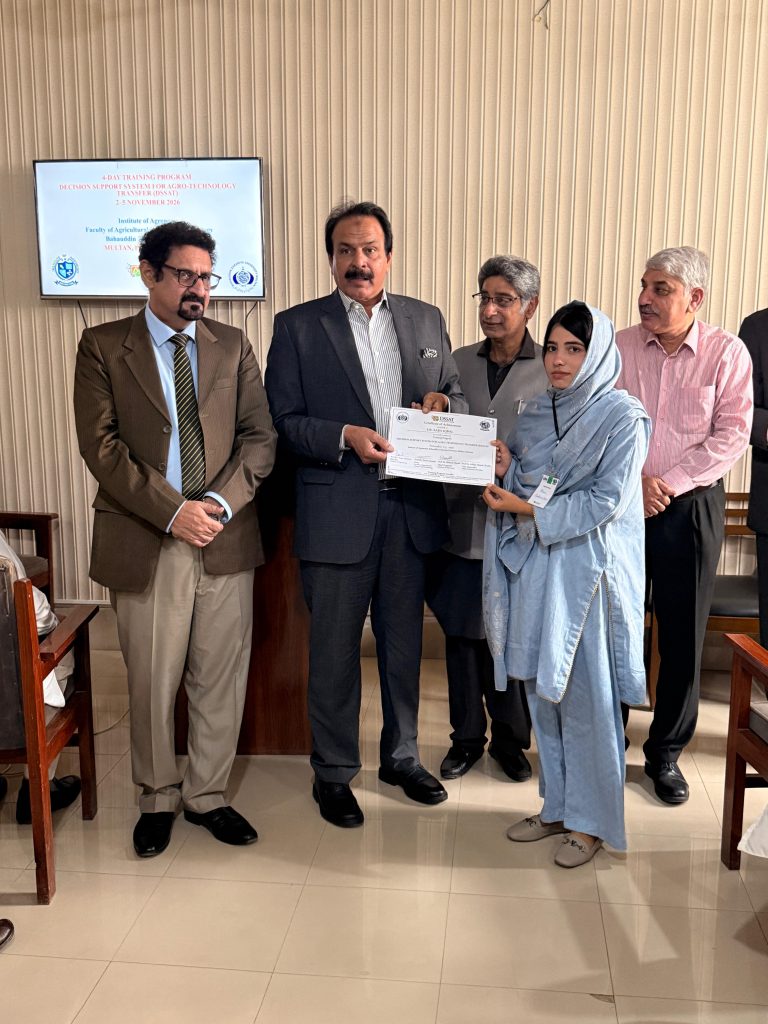
Prof. Dr. Azra Yasmeen, Director, Institute of Agronomy; Prof. Dr. Nazim Hussain, Dean, Faculty of Agricultural Sciences and Technology (FAST); Prof. Dr. Ashfaq Ahmad Chattha, Vice Chancellor, Ghazi University, Dera Ghazi Khan; and Prof. Dr. Muhammad Zubair Iqbal, Vice Chancellor, Bahauddin Zakariya University (BZU), Multan, Pakistan, distributed certificates among the participants.
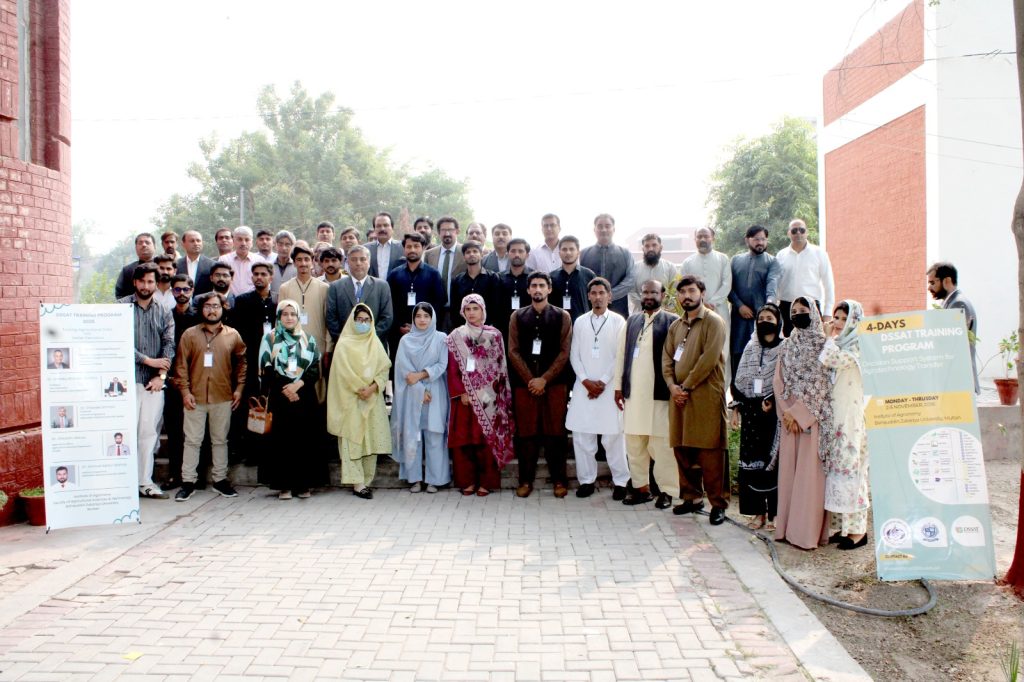
At the end of the four-day workshop, Prof. Dr. Shakeel Ahmad, Chief Coordinator, DSSAT training program, thanked the participants, colleagues, Bahauddin Zakariya University administration, Prof. Dr. Gerrit Hoogenboom, University of Florida, and DSSAT Foundation for their support in making the event successful. The DSSAT training faculty are committed to continuing their online assistance to help participants to simulate their own field data using the DSSAT model.
The workshop also received significant publicity from local and regional newspapers.